











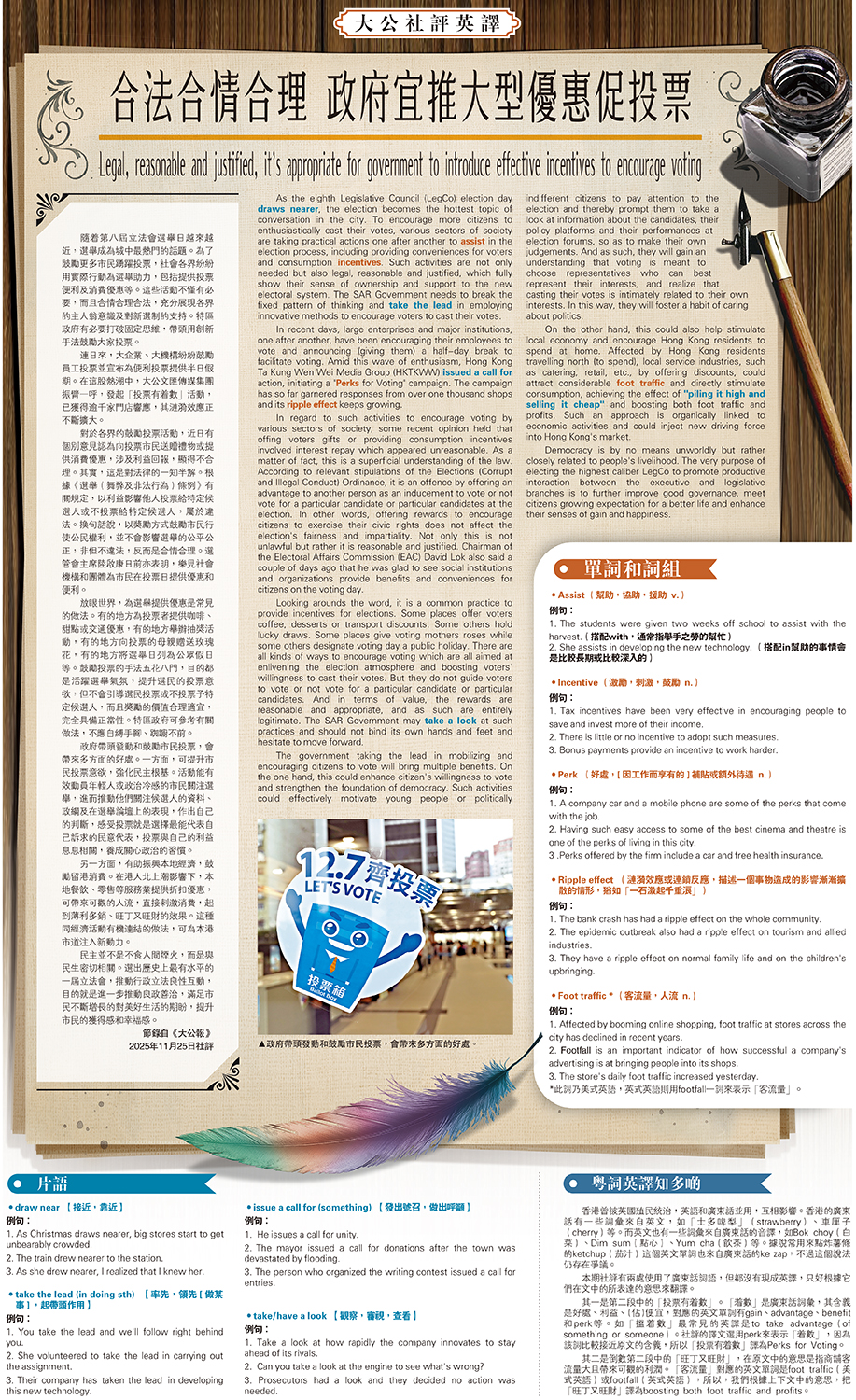
隨着第八屆立法會選舉日越來越近,選舉成為城中最熱門的話題。為了鼓勵更多市民踴躍投票,社會各界紛紛用實際行動為選舉助力,包括提供投票便利及消費優惠等。這些活動不僅有必要,而且合情合理合法,充分展現各界的主人翁意識及對新選制的支持。特區政府有必要打破固定思維,帶頭用創新手法鼓勵大家投票。
連日來,大企業、大機構紛紛鼓勵員工投票並宣布為便利投票提供半日假期。在這股熱潮中,大公文匯傳媒集團振臂一呼,發起「投票有着數」活動,已獲得逾千家門店響應,其漣漪效應正不斷擴大。
對於各界的鼓勵投票活動,近日有個別意見認為向投票市民送贈禮物或提供消費優惠,涉及利益回報,顯得不合理。其實,這是對法律的一知半解。根據《選舉(舞弊及非法行為)條例》有關規定,以利益影響他人投票給特定候選人或不投票給特定候選人,屬於違法。換句話說,以獎勵方式鼓勵市民行使公民權利,並不會影響選舉的公平公正,非但不違法,反而是合情合理。選管會主席陸啟康日前亦表明,樂見社會機構和團體為市民在投票日提供優惠和便利。
放眼世界,為選舉提供優惠是常見的做法。有的地方為投票者提供咖啡、甜點或交通優惠,有的地方舉辦抽獎活動,有的地方向投票的母親贈送玫瑰花,有的地方將選舉日列為公眾假日等。鼓勵投票的手法五花八門,目的都是活躍選舉氣氛,提升選民的投票意欲,但不會引導選民投票或不投票予特定候選人,而且獎勵的價值合理適宜,完全具備正當性。特區政府可參考有關做法,不應自縛手腳、踟躕不前。
政府帶頭發動和鼓勵市民投票,會帶來多方面的好處。一方面,可提升市民投票意欲,強化民主根基。活動能有效動員年輕人或政治冷感的市民關注選舉,進而推動他們關注候選人的資料、政綱及在選舉論壇上的表現,作出自己的判斷,感受投票就是選擇最能代表自己訴求的民意代表,投票與自己的利益息息相關,養成關心政治的習慣。
另一方面,有助振興本地經濟,鼓勵留港消費。在港人北上潮影響下,本地餐飲、零售等服務業提供折扣優惠,可帶來可觀的人流,直接刺激消費,起到薄利多銷、旺丁又旺財的效果。這種同經濟活動有機連結的做法,可為本港市道注入新動力。
民主並不是不食人間煙火,而是與民生密切相關。選出歷史上最有水平的一屆立法會,推動行政立法良性互動,目的就是進一步推動良政善治,滿足市民不斷增長的對美好生活的期盼,提升市民的獲得感和幸福感。
節錄自《大公報》2025年11月25日社評
Legal, reasonable and justified, it's appropriate for government to introduce effective incentives to encourage voting
As the eighth Legislative Council (LegCo) election day draws nearer, the election becomes the hottest topic of conversation in the city. To encourage more citizens to enthusiastically cast their votes, various sectors of society are taking practical actions one after another to assist in the election process, including providing conveniences for voters and consumption incentives. Such activities are not only needed but also legal, reasonable and justified, which fully show their sense of ownership and support to the new electoral system. The SAR Government needs to break the fixed pattern of thinking and take the lead in employing innovative methods to encourage voters to cast their votes.
In recent days, large enterprises and major institutions, one after another, have been encouraging their employees to vote and announcing (giving them) a half-day break to facilitate voting. Amid this wave of enthusiasm, Hong Kong Ta Kung Wen Wei Media Group (HKTKWW) issued a call for action, initiating a "Perks for Voting" campaign. The campaign has so far garnered responses from over one thousand shops and its ripple effect keeps growing.
In regard to such activities to encourage voting by various sectors of society, some recent opinion held that offing voters gifts or providing consumption incentives involved interest repay which appeared unreasonable. As a matter of fact, this is a superficial understanding of the law. According to relevant stipulations of the Elections (Corrupt and Illegal Conduct) Ordinance, it is an offence by offering an advantage to another person as an inducement to vote or not vote for a particular candidate or particular candidates at the election. In other words, offering rewards to encourage citizens to exercise their civic rights does not affect the election's fairness and impartiality. Not only this is not unlawful but rather it is reasonable and justified. Chairman of the Electoral Affairs Commission (EAC) David Lok also said a couple of days ago that he was glad to see social institutions and organizations provide benefits and conveniences for citizens on the voting day.
Looking arounds the word, it is a common practice to provide incentives for elections. Some places offer voters coffee, desserts or transport discounts. Some others hold lucky draws. Some places give voting mothers roses while some others designate voting day a public holiday. There are all kinds of ways to encourage voting which are all aimed at enlivening the election atmosphere and boosting voters' willingness to cast their votes. But they do not guide voters to vote or not vote for a particular candidate or particular candidates. And in terms of value, the rewards are reasonable and appropriate, and as such are entirely legitimate. The SAR Government may take a look at such practices and should not bind its own hands and feet and hesitate to move forward.
The government taking the lead in mobilizing and encouraging citizens to vote will bring multiple benefits. On the one hand, this could enhance citizen's willingness to vote and strengthen the foundation of democracy. Such activities could effectively motivate young people or politically indifferent citizens to pay attention to the election and thereby prompt them to take a look at information about the candidates, their policy platforms and their performances at election forums, so as to make their own judgements. And as such, they will gain an understanding that voting is meant to choose representatives who can best represent their interests, and realize that casting their votes is intimately related to their own interests. In this way, they will foster a habit of caring about politics.
On the other hand, this could also help stimulate local economy and encourage Hong Kong residents to spend at home. Affected by Hong Kong residents travelling north (to spend), local service industries, such as catering, retail, etc., by offering discounts, could attract considerable foot traffic and directly stimulate consumption, achieving the effect of "piling it high and selling it cheap" and boosting both foot traffic and profits. Such an approach is organically linked to economic activities and could inject new driving force into Hong Kong's market.
Democracy is by no means unworldly but rather closely related to people's livelihood. The very purpose of electing the highest caliber LegCo to promote productive interaction between the executive and legislative branches is to further improve good governance, meet citizens growing expectation for a better life and enhance their senses of gain and happiness.
單詞和詞組
•Assist(幫助,協助,援助 v.)
例句:
1. The students were given two weeks off school to assist with the harvest.(搭配with,通常指舉手之勞的幫忙)
2. She assists in developing the new technology. (搭配in幫助的事情會是比較長期或比較深入的)
•Incentive(激勵,刺激,鼓勵 n.)
例句:
1. Tax incentives have been very effective in encouraging people to save and invest more of their income.
2. There is little or no incentive to adopt such measures.
3. Bonus payments provide an incentive to work harder.
•Perk(好處,[ 因工作而享有的 ] 補貼或額外待遇 n.)
例句:
1. A company car and a mobile phone are some of the perks that come with the job.
2. Having such easy access to some of the best cinema and theatre is one of the perks of living in this city.
3 .Perks offered by the firm include a car and free health insurance.
•Ripple effect(漣漪效應或連鎖反應,描述一個事物造成的影響漸漸擴散的情形,猶如「一石激起千重浪」)
例句:
1. The bank crash has had a ripple effect on the whole community.
2. The epidemic outbreak also had a ripple effect on tourism and allied industries.
3. They have a ripple effect on normal family life and on the children's upbringing.
•Foot traffic *(客流量,人流 n. )
例句:
1. Affected by booming online shopping, foot traffic at stores across the city has declined in recent years.
2. Footfall is an important indicator of how successful a company's advertising is at bringing people into its shops.
3. The store's daily foot traffic increased yesterday.
*此詞乃美式英語,英式英語則用footfall一詞來表示「客流量」。
片語
•draw near【接近,靠近】
例句:
1. As Christmas draws nearer, big stores start to get unbearably crowded.
2. The train drew nearer to the station.
3. As she drew nearer, I realized that I knew her.
•take the lead (in doing sth)【率先,領先 [ 做某事 ] ,起帶頭作用】
例句:
1. You take the lead and we'll follow right behind you.
2. She volunteered to take the lead in carrying out the assignment.
3. Their company has taken the lead in developing this new technology.
•issue a call for (something)【發出號召,做出呼籲】
例句:
1. He issues a call for unity.
2. The mayor issued a call for donations after the town was devastated by flooding.
3. The person who organized the writing contest issued a call for entries.
•take/have a look【觀察,審視,查看】
例句:
1. Take a look at how rapidly the company innovates to stay ahead of its rivals.
2. Can you take a look at the engine to see what's wrong?
3. Prosecutors had a look and they decided no action was needed.
粵詞英譯知多啲
香港曾被英國殖民統治,英語和廣東話並用,互相影響。香港的廣東話有一些詞彙來自英文,如「士多啤梨」(strawberry)、車厘子(cherry)等。而英文也有一些詞彙來自廣東話的音譯,如Bok choy(白菜)、Dim sum(點心)、Yum cha(飲茶)等。據說常用來點炸薯條的ketchup(茄汁)這個英文單詞也來自廣東話的ke zap,不過這個說法仍存在爭議。
本期社評有兩處使用了廣東話詞語,但都沒有現成英譯,只好根據它們在文中的所表達的意思來翻譯。
其一是第二段中的「投票有着數」。「着數」是廣東話詞彙,其含義是好處、利益、(佔)便宜,對應的英文單詞有gain、advantage、benefit和perk等。如「搵着數」最常見的英譯是to take advantage(of something or someone)。社評的譯文選用perk來表示「着數」,因為該詞比較接近原文的含義,所以「投票有着數」譯為Perks for Voting。
其二是倒數第二段中的「旺丁又旺財」,在原文中的意思是指商舖客流量大且帶來可觀的利潤。「客流量」對應的英文單詞是foot traffic(美式英語)或footfall(英式英語),所以,我們根據上下文中的意思,把「旺丁又旺財」譯為boosting both foot traffic and profits。